Community Services

Free Smoke Alarms
We offer limited assistance to senior citizens and individuals with mobility or physical limitations who do not have another resource available (such as a family member, friend, neighbor, handyman, or electrician). The department’s limited supply of free battery-powered alarms are for those families unable to afford alarms. Firefighters are prohibited from working on hard-wired systems. Please complete the Smoke Alarm Request form or call us at (360) 576-1195.
  • Be sure that the smoke detectors you purchase carry the label of an independent testing laboratory.
  • Identify the power source for your alarm. Some alarms run on household current and include battery backup, which require professional installation. Some alarms run just on batteries which you can usually install yourself. “Long-life” alarms have “10-year” or lithium batteries that are intended to last the life of the smoke alarm.
  • Identify the type of alarm. Some alarms use an “ionization” type smoke-sensing system; others use “photoelectric” sensors. Recent studies have shown that your family will be better protected by using an alarm that offers both smoke-sensing systems.
  • Some alarms have a hush or silence feature so you can deactivate if cooking fumes or steam set them off. These models will reactivate automatically after 8 to 10 minutes.
  • For people who are deaf or hard-of-hearing, some alarms flash a strobe-like light. 
  • Install alarms on every level of your home – including the basement.
  • Install an alarm inside or outside each sleeping area. Make sure everyone can clearly hear and recognize the sound of all smoke alarms at all times. If you sleep with your bedroom door closed, have a qualified electrician install interconnected smoke alarms in each room so when one sounds, they all sound.
  • Studies have shown that some children may not awaken to the sound of a smoke alarm. Know what your child will do before a fire occurs. For more information on this issue, smoke alarms, and escape planning, visit www.nfpa.org/factsheets.
  • On floors without bedrooms, install alarms in the living room and/or near the stairways to the upper level. Don’t install alarms closer than 3 feet from a kitchen or bathroom door. Don’t install alarms in locations where the temperature may be too low or too high.
  • Mount alarms high on a wall or on the ceiling because smoke rises. Wall mounting: position the alarm 4 to 12 inches from the ceiling. Ceiling mounted: position alarm at least 4 inches away from the nearest wall.
  • In a room with a pitched ceiling, mount the alarm at or near the ceiling’s highest point. Basement alarms should be located near the stairway leading to the floor above.
  • Don’t mount an alarm within 3 feet of a forced-air supply register.
  • Follow the manufacturer’s instructions.
  • Install most battery-powered and plug-in alarms using only a drill and a screwdriver. Plug-in alarms must have restraining devices at the plug. Have a qualified electrician install alarms that are hard-wired into your electrical system. Wire alarms together so that if one sounds, they all sound.
  • Test alarms monthly. Replace batteries at least once a year (when you change your clocks by an hour in the spring or fall) or when an alarm “chirps” to tell you that the battery is low.
  • Replace any alarm that is more than 10 years old.
  • Never “borrow” a smoke alarm battery and never paint a smoke alarm. 
Free Blood Pressure Checks

Visit one of our Fire District 6 fire stations for a free blood pressure check. 

If the door is locked, ring the bell. Unless firefighters are out of the station at an emergency, they will be happy to assist you.

You can call ahead: (360) 576-1195.

Many members of our community live with high blood pressure.

Medication is commonly prescribed to treat this problem. People often work through adjustments to their medication until the levels are acceptable. Doctors at times will ask their patients to check their blood pressure regularly to determine how effective the medication is working.

Stopping by your local fire station provides a consistent means of getting blood pressure readings on a regular basis.

Join the Community Emergency Response Team

You can make a difference during a disaster. CERT training is a 20+ hour class that teaches citizens to take care of their families and neighborhoods after a disaster strikes.

Registration for fall classes will open at 9:00 am on September 15th. There are two fall sessions, one in Ridgefield and one in Vancouver.

Clark County Fire District 6 and the Vancouver Fire Department provide support for CRESA’s countywide program to train citizens 18 and older to assist in their neighborhood in the event of a disaster. To learn more go to CERT’s website here.

You can make a difference during a disaster, and the next two classes start in mid-September. One is held at Clark-Cowlitz Fire and Rescue Station 21 in Ridgefield and the other at the Bridgeview Resource Center in Vancouver. 

When first responders like the fire department are overwhelmed due to a significant earthquake, flood, or fire, trained CERT members act as an extension of first responder services by providing immediate assistance to victims until professional services can take over.

To learn more go to CERT’s website here.

CERT training is a 20+ hour class that teaches citizens to take care of their families and neighborhoods after a disaster strikes. Topics taught include:

  • Disaster Preparedness
  • Basic fire suppression
  • Disaster medical operations
  • Light search and rescue
  • Disaster psychology
  • Organization and communications
  • Terrorism awareness

Public Education

The wildland-urban interface (WUI) is the area where urban and suburban development meets undeveloped areas containing natural vegetation.

District 6 is an intermix WUI where development, such as structures, is interspersed or scattered throughout wildland vegetation. An intermix WUI is often found in rural, exurban, or large-lot suburban developments.

Defensible space is the area around a structure free of flammable plants and objects. It creates a zone in which firefighters can operate safely in order to help protect a home during a wildfire. This space is wide enough to prevent direct flame impingement and reduce the amount of radiant heat reaching the structure. 

Being Prepared

If there is a fire, you may have less than 3 minutes to get out of your home. Talk about what you should do to be safe. Make sure everyone in your home knows what to do if there is a fire.

Prepare now for a sudden emergency. Learn how to protect yourself and cope with disaster by planning ahead.

FIRE IS EVERYONE’S FIGHT!
  • Is there a working smoke alarm on each level of your home and near each sleeping area?
  • Are they mounted high on walls or on ceilings well away from the path of steam from bathrooms and cooking vapors from the kitchen which can result in false or nuisance alarms?
  • Do you replace the batteries regularly (at least every year)?
  • Do you test your smoke alarm monthly?
  • Have you pushed the “Test” button and made sure everyone recognizes the sound?
  • If you are hearing and/or visually impaired, do you have smoke alarms with strobes and/or vibration signals?
  • Does everyone living in your home know to escape first and then call 9-1-1 from a safe location?
  • Do you have an escape plan?
  • Does it include two ways out of every room?
  • Is everyone living in your home familiar with the plan?
  • Do you have a designated meeting place, outside your home, that everyone knows?
  • Do you practice the escape plan regularly and at varying times so the escape plan becomes second nature?
  • Have you practiced your escape plan when family members are sleeping to make sure each person awakes and is able to properly respond to the smoke alarm?
  • Have you practiced your plan crawling on hands and knees as though there were heat and smoke?
  • Have you practiced your plan with an exit blocked to become familiar with using alternate exits?
  • Is there a flashlight with good batteries by each person’s bed?
  • Is there a whistle by each bed to warn others of a fire or to alert rescuers to that location?
  • Are your house and car keys near your bedside so they are easily accessible?
  • Do windows and doors open easily from inside?
  • Do you keep escape routes clear at all times (furniture, toys, storage, clutter)?
  • Have you provided escape ladders or other provisions for upstairs rooms?
  • Have ladders been opened and used safely from the ground floor window for practice?
  • Have you ensured that family members with special needs, such as small children, the ill or frail, and those who can’t wake up at the alarm sound, have a “buddy” to help them get out safely?
  • Are address numbers at least 3-5″ high, a contrasting color from the rest of the exterior, and clearly visible from the street?
  • Do you have a single box containing all important papers (preferably fireproof)?
  • Have you cataloged and updated your household inventory for insurance claims?
  • Do you keep space heaters at least three feet from anything that will burn (newspapers, furniture, curtains, clothes, etc.)?
  • Are all electrical cords and plugs in good condition?
  • Are you careful not to overload any electrical outlet, extension cord, or power strip?
  • Do you frequently check wires and cords to make sure they are not damaged?
  • Are bathroom and kitchen outlets protected by ground-fault circuit interrupters?
  • Are candles and oil lamps fully extinguished before you leave the room or go to sleep?
  • Are candles in sturdy non-tip and non-combustible candle holders?
  • Do you keep candles out of the reach of children and pets and have a rule that children may not have candles or incense in their rooms?
  • Do you keep matches and lighters high, out of the reach and sight of children, preferably in a locked cabinet?
  • Is there a fire extinguisher within easy access to the cooking area?
  • Do you know how to use it?
  • Do you always keep things that can burn, such as dish towels, paper and plastic, curtains, etc… at least three feet from the range top?
  • Do you always remain in the room while cooking?
  • Do you avoid wearing any loose fitting clothing that could catch fire while cooking?
  • Do you turn off and unplug appliances when they are not in use?
  • Are curling irons and hot rollers unplugged immediately after every use?
  • Do you keep appliances and surrounding areas clean so that grease does not build up and catch fire?
  • Is every smoker committed to never smoke in bed?
  • Do you douse cigarette and cigar butts with water before dumping them in the trash?
  • Do you have large, deep, non-tip ashtrays for smokers?
  • Are newspapers, empty boxes, rags, paints, and gasoline cans stored in proper containers outside the house and away from heaters, outlets, or any other possible ignition source?
  • Do you have chimneys, fireplaces, wood and coal stoves, central furnaces, and space heaters inspected by professionals once a year and cleaned regularly?
  • Is firewood stacked at least ten feet from the house?
  • If you have a wood or coal fueled stove, is it properly installed and maintained?
  • If you have a fireplace, is it fitted with approved doors or screens?
  • Do you keep anything that will burn well away from the fireplace?
  • Are all ashes and coals placed in a metal container away from the house?
  • Is the exterior of your home clear of all trash, dead grass, leaves, and other combustible materials?
  • Is your barbeque grill at least three feet from the house, trees, shrubs, and other things that will burn when cooking?
  • Never use a grill on a wooden deck or porch or indoors.

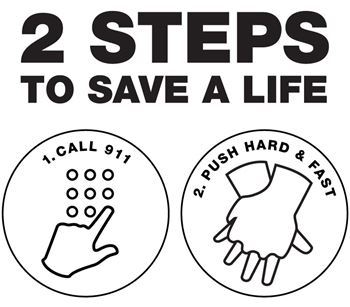
According to the American Heart Association, about 90% of people who experience out-of-hospital cardiac arrest die. Their chance of survival is nearly zero unless someone takes action immediately.

Hands-only CPR can double or triple the chance of survival.

Adults or teens who suddenly collapse and are not responsive (not breathing, gasping, or talking) are likely experiencing sudden cardiac arrest.

You should call 9-1-1 and start pushing hard & fast in the center of the chest with minimal interruptions.

Remember, you are buying precious time for first responders to arrive.
Outreach

About Cadets

The Fire Cadet Program is a joint venture between Clark County Fire District 6, Clark County Fire District 3, Clark-Cowlitz Fire Rescue, and Cascadia Tech Academy, formerly known as the Clark County Vocational Skills Center. The Cadet Advisory Committee oversees the program.   

If you attend an area high school and are interested in this career development program, please contact your school’s career counselor and apply online at Cascadia Tech Academy. 

Is it physically demanding? You bet it is!

This two-year program, open to juniors and seniors, allows students to explore a career in the emergency services field with an emphasis on developing fundamental skills in the fire service and the emergency medical service. In addition to studying fire science and emergency medicine, cadets are taught skills in team building, decision-making, and problem-solving. 

This hands-on course is also physically demanding at times. Cadets participate in training fires and are instructed in advanced first aid/CPR. Successful completion of the program, with a grade of “B” or better, may result in college credit.

Students in the Fire Science program year one will learn:

  • Washington State Occupational First Aid/CPR
  • Basic firefighting skills
  • Teamwork and cooperation skills
  • Apply concepts and mathematical procedures
  • Hydraulics
  • Application of science and physics to the fire ground
  • HazMat Awareness
  • Physical training

Students in the Fire Science program year two will learn:

  • Wildland firefighting skills
  • Advanced firefighting skills and application
  • HazMat operations
  • Ride-along firefighting experience
  • Physical training

Program Benefits:

  • Basic & Advanced Firefighting Skills
  • HazMat Awareness
  • Wildland Firefighting Skills
  • Hydraulics
  • 3 High School Credits per year
  • Ride-Along Firefighting Experience
  • Up to 12 College Credits

Industry Certifications Available:

  • Incident Command System (ICS)
    • IS-100.C Introduction to ICS for Operational First Responders
    • IS-200.C Basic National Incident Management System (NIMS) ICS for Initial Responders
    • IS-700.B: An Introduction to the NIMS
    • IS-800.D: National Response Framework, An Introduction
  • S130/190 Introduction to Wildland Fire Behavior
  • FF1 (Firefighter 1)
  • FF2 (Firefighter 2)
  • First Aid/CPR
  • YouScience
  • 21st Century Skills
image
Is youth firesetting a problem?
The National Fire Protection Agency reports that fires set by young children in the United States annually result in 95,000 fires, over 300 deaths, 3,000 injuries, and $300 million in property damage.
 
The FBI Crime Index reports that juvenile and adult arson cause an annual average of 560,000 fires, 750 deaths, 3,700 injuries, and $1.5 billion in property loss. 55% of all arson arrests in the United States are children under 18. Nearly half of these are age 15 and under 6.8% are under age 10. The crime of arson has the highest rate of juvenile involvement.
Teach young children that fire and fire tools are for grown-ups to use.
  • Keep matches and lighters out of reach in high, ideally locked, cabinets. Ask young children to tell you when they find matches and lighters, and then make sure you put them away.
Teach older children proper techniques for using fire and fire tools – how to safely strike a match or light a candle with supervision.
  • Praise your child for practicing responsible behavior and showing respect for fire. Set a good example – use matches, lighters, and fire carefully.
Fire is dangerous and can be deadly. Even small fires spread quickly.
  • Never leave stove or candle fires unattended.
  • Install and maintain smoke alarms for early warning.
  • Plan and practice a home fire escape.
If you know of a child firesetter in need of assistance or if you want more information about child firesetting and juvenile arson, please contact us.
 
Fire District 6 
Community Risk Reduction Coordinator
8800 NE Hazel Dell Ave Vancouver, WA 98665
(360) 576-1195
 
Fire District 6 offers a juvenile firesetter intervention program to children. Trained personnel offer a juvenile firesetter intervention program that includes an interview, education and follow-up with the child to help stop firesetting behavior.

The age-old tradition of the District 6 Open House takes place the first Saturday in June at Station 63 in Salmon Creek.

The 2026 Open House is set for Saturday, June 6th, from Noon to 3 p.m.  The address for Station 63 is 1303 NE 136th Street. 

We plan lots of fun things for the Open House, from live-burn demonstrations to the Technical Rescue Team showing off their skills on our training tower. We have free hot dogs donated from NW Natural and free beverages donated from Corwin Beverage.


Fire District 6 provides emergency medical support from our two-bay station on the Clark County Fairgrounds during the annual County Fair.

Even the heat is not keeping people away from the Clark County Fair! We're  fully staffed to respond to any medical emergency, and we've got our mister  up and running to help

Every October, Clark County Fire District 6 will visit district elementary schools for fire safety education.
 
Our demonstration consists of playing the “What’s Hot What’s Not” game, reading the kids fire safety book “No Dragons For Tea,” showing kids what firefighters look like with their gear on, and capping it off with a chance for each kiddo to spray the fire hose!
 
This provides great incentive for kids to pay attention to the important message. By the time the month is over we will have spread the message of fire safety to over 1,000 students in eight different Vancouver District schools.